Highguard Took Aim But Missed Its Big Chance
Wildlight Entertainment failed to capitalize on what should have been a tremendous gift.
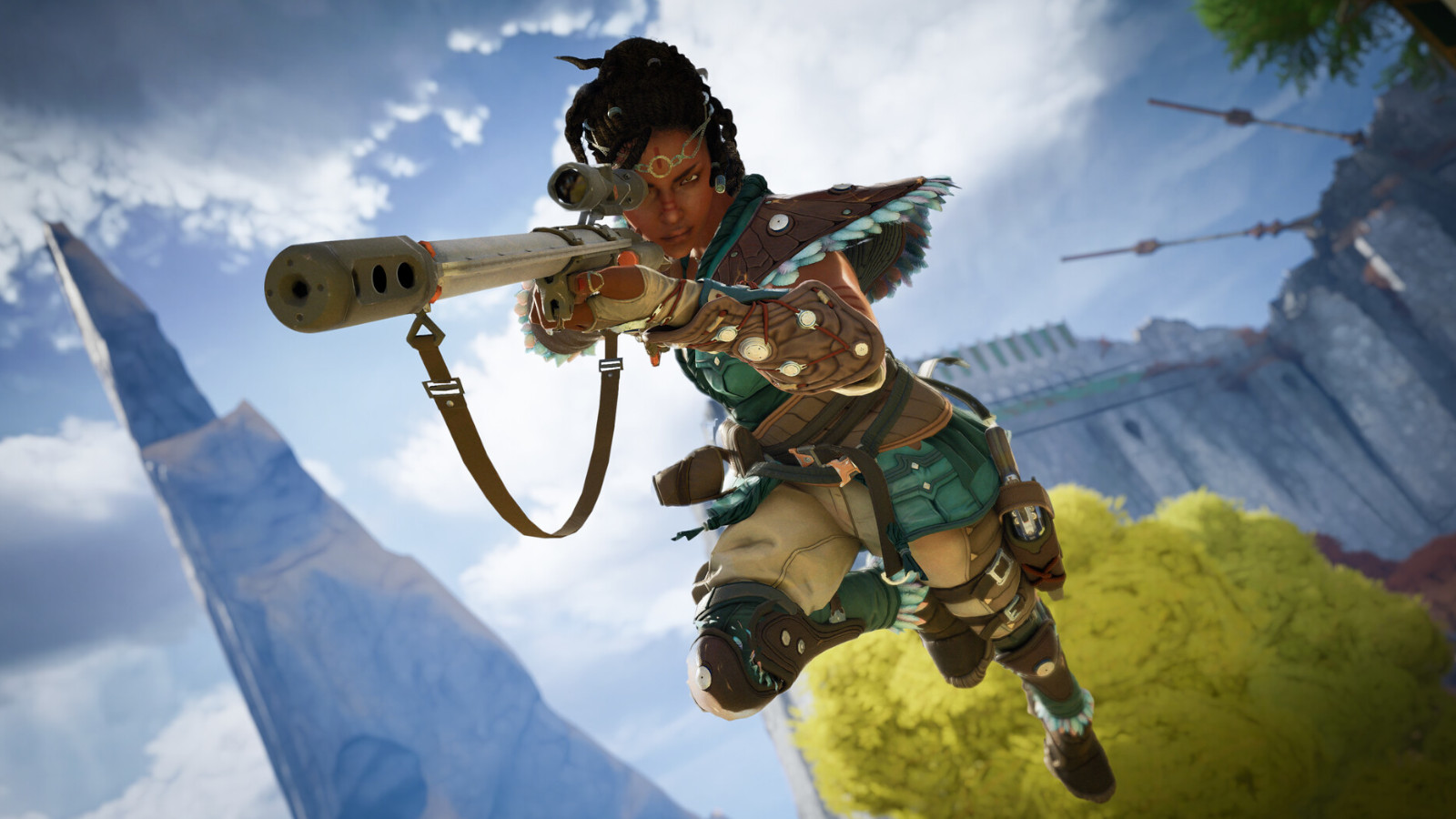
By now, you probably know the story of Highguard: picked by Geoff Keighley to be the final trailer shown at The Game Awards in December, launching to subpar reviews and player numbers, and now likely on its last legs. The team at Wildlight Entertainment – what’s left of it, at least – is now wondering if it can turn things around, and if not, when will the final hammer fall?
We’ve still got 10 months to go in 2026, but for now, Highguard – a relatively minor game in the grand scheme of it all – is set to go down as the year’s biggest flop so far. How did it all go so wrong, and what, if anything, could Wildlight have done differently?
Commanding data
First, let’s look at the numbers, which don’t paint a pretty picture. Steam Charts’ trend is firmly downwards from the game’s launch one month ago, where it peaked at 15,147 concurrent players. By itself, even that’s a so-so number for a free-to-play game. It currently averages less than 1,000 players at any given time.
Apex Legends, which was considered Highguard’s closest comparison, launched on Steam to an average of 74,957 players and a peak of 117,193 in November 2020. Admittedly, that was nearly two years after its stealth launch, but it’s fair to say that it pulled in much better than 15,000 concurrent players upon its debut in early 2019.
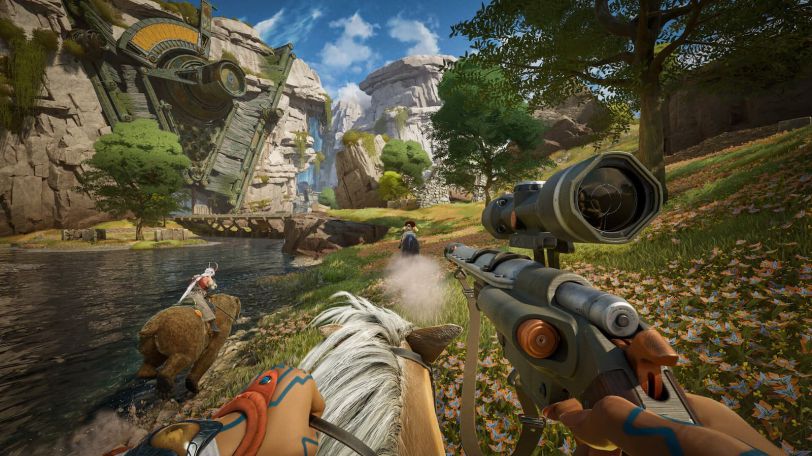 One thing to keep in mind is that a significant number of players likely only paid attention to the game because of its premium slot on The Game Awards. Whether they liked it or not, or were just there to play for a few minutes before leaving a negative review, the game’s profile was undoubtedly bolstered by Keighley, and the numbers would have been much lower without him.
Speaking of reviews, the question of review-bombing has been high on people’s minds and sometimes blamed for the game’s (unfairly) poor reception. As it currently stands, the game has a 46% positive rating on Steam (counting only English reviews; 45% counting all languages), but that might be deceptive. As this article pointed out, its numbers aren’t as bad when players give it a chance.
However, I feel like it’s a little too generous, counting only reviews from players who have played at least five hours. I don’t typically need that much time to decide if a game is right for me. If I have played it that long – especially if it's a match-based PvP shooter, which would amount to a dozen or so matches – then I probably like the game, so the five-hour limit somewhat amounts to a kind of survivor bias.
As I write this today, February 25, 2026, here are the positive reviews for various hour breaks, counting all languages:
0 hours (all reviews): 45% on 39,496 reviews
1 hour: 59% on 26,496 reviews
2 hours: 73% on 17,191 reviews
3 hours: 79% on 12,889 reviews
4 hours: 81% on 9,915 reviews
5 hours: 82% on 7,754 reviews
8 hours: 83% on 4,393 reviews
10 hours: 82% on 3,258 reviews
That paints a rosier picture, for sure, with the game managing about an 80% positive rating among players who have given it a solid chance.
Also, since a lot of review-bombing likely took place during the game’s initial rollout, here’s a look at how the reviews stack up over various time breaks since launch:
First week: 41% on 31,120 reviews
Second week: 67% on 3,119 reviews
Third week: 60% on 1,214 reviews
Fourth week: 58% on 736 reviews
Fifth week (so far): 65% on 160 reviews
That’s less positive, but at least it confirms that the worst of the damage was done early.
Now the bad news: This still isn’t good enough for the kind of game Highguard is. While 80% is the breakpoint between “Mixed” and “Very Positive” on Steam, it’s really only average, at best.
Many years ago, when Steam Spy was a thing, its caretaker pointed out that 82% was the median review score on Steam. That meant that half of all games were above 82%, and half were below it. Therefore, a game rated at 80% was actually in the bottom half of games; there were more games that were reviewed higher than reviewed lower.
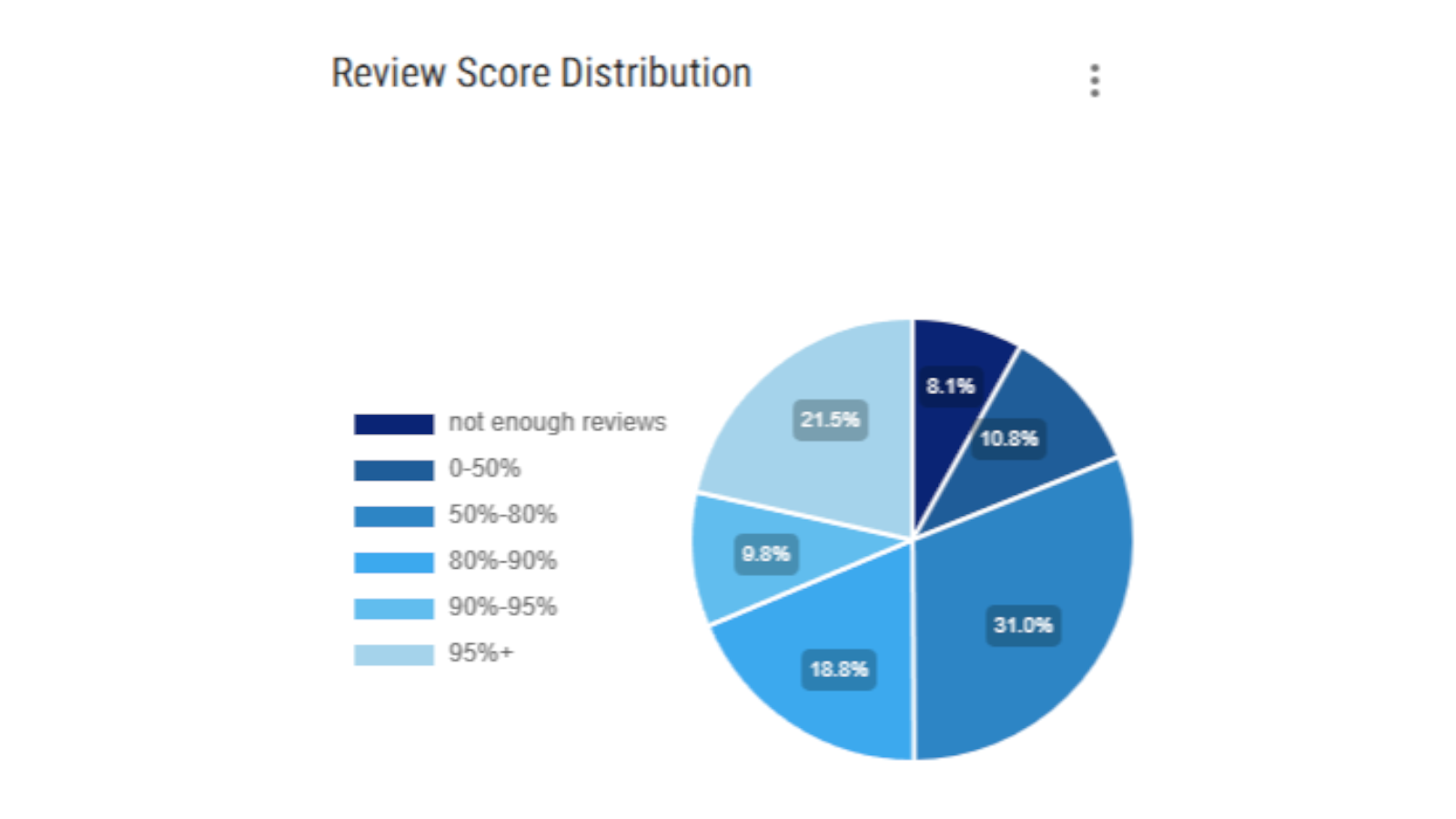
The more recent “Review Score Distribution” chart on this page seems to roughly corroborate that finding, with roughly half of all games on each side of 80%.
Think of it like having games on your Steam wishlist or in your library. They’re all “good,” in the sense that you want to play them, but you likely don’t have time to get to them all. So you play the games you like better and rarely, if ever, get to the games at the bottom of your list.
That’s the same thing with an 80%-level game. It’s fine, you like it, and it may even be objectively “good,” but there are things you like better. That’s the fate of many a good-but-not-great game.
Take another look at the by-hour positive ratings above. Among players who like the game at an 80% clip (3+ hours), only 3,258/12,889 = 25% have played it for a full 10 hours or more. That means three out of four people who actually like the game haven’t even played for 10 hours. How many games have you played for more than 10 hours in the last month? Quite a few, I’d imagine, and that means they’re better (to you) than Highguard.
Highguard may have been well-liked by a subset of people, but was it good enough to tear them away from Apex Legends, Overwatch, League of Legends, Fortnite, or whatever extraction/hero shooter or even MMORPG they play on a regular basis? The answer seems to be “no.”
The path backwards
So what could Wildlight Entertainment have done to prevent this situation? The obvious answer is “make the game better,” but that’s only one part of it, and a subjective one at that.
Should they have refused Geoff Keighley’s offer to put the trailer at the end of The Game Awards? As I mentioned previously, Highguard likely only got as many initial players as it did due to that exposure, and if that wasn’t enough to keep the lights on (as it appears it isn’t), then having half or even fewer players wouldn’t have accomplished that either.
The key mistake, I think, was in not making the most of the gift that they stumbled into. In the seven weeks between the Game Awards and Highguard’s launch, we heard virtually nothing about the game. A savvy team would have had marketing materials ready to go as soon as the trailer dropped, or at least the day after The Game Awards. Normally, that would have been to follow up on the big announcement, but in this case, the plan would have been at least partially to do damage control in the wake of the public backlash.
At the very least, the team should have recognized in the intervening time that the public perception of Highguard was not very good and worked to correct that. Instead, as the game’s YouTube channel shows, there was nothing posted between the initial trailer and launch, after which a slew of videos highlighting gameplay, developer vision, and individual elements were thrust out into the wild.
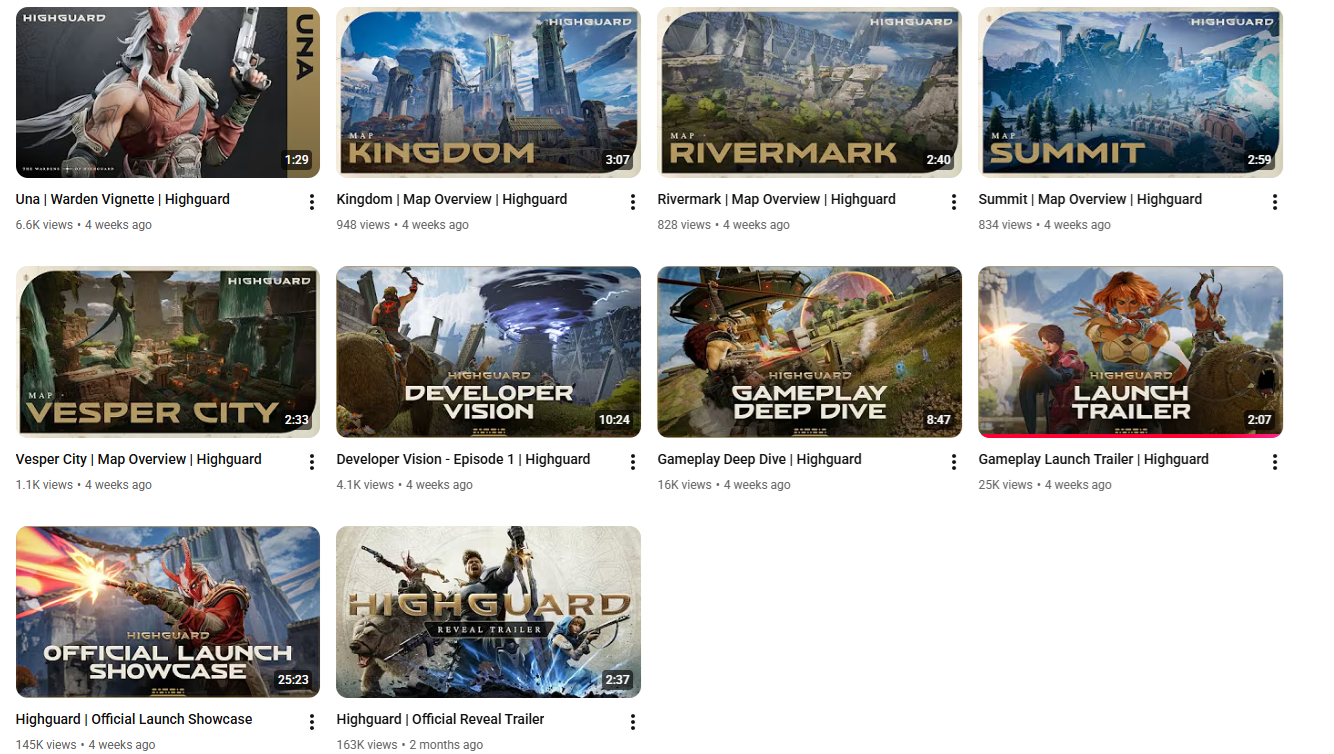
By that time, though, people preferred to play the game and form their own opinions, for good or ill, rather than watch videos about it. The devs had lost the right to shape the narrative, letting negative feelings stew for nearly two months and doing nothing to counter them. They pinned all their hopes on the game standing on its own – likely due to a culture of toxic positivity – and squandered any chance they might at developing good will.
We’re all tired of countless teasers, trailers, hype videos, dev diaries, and marketing in general for games that are months or years away, but Highguard is a picture-perfect case where more marketing and hype were desperately needed. The fact that they had all those videos ready to go at launch makes their decision to hold back even more baffling. Maybe it wouldn’t have mattered – maybe the game just wasn’t ready and should have launched seven months instead of seven weeks after The Game Awards – but it couldn’t have hurt. Now it’s probably too late.
Related Articles
About the Author

Jason Winter is a veteran gaming journalist, he brings a wide range of experience to MMOBomb, including two years with Beckett Media where he served as the editor of the leading gaming magazine Massive Online Gamer. He has also written professionally for several gaming websites.
More Stories by Jason WinterRead Next

They’re all coming out this year.
You May Enjoy
Experience the game’s latest League.

The first half of the Imperial Palace update is live.

The new chapter is the game’s biggest expansion so far.
The game’s first patch will address issues with content, quality of life, and monetization.
Discussion (0)